Homes equipped with smart building technologies sell an average of 8.5 days faster than traditional homes. They deliver a property-value increase of between 5% and 10%. And 78% of first-time home buyers see smart-home infrastructure as a decisive factor in their purchase decision.
These figures show that smart building technologies are no longer a luxury but have become a strategic investment that directly affects sales performance. For project owners, though, the real question is: which technologies really speed up sales, how long does the investment take to pay back, and how should these features be marketed to the buyer?
In this guide, we examine the impact of smart building technologies on home sales from the developer's perspective. We offer a comprehensive framework from market data to cost analysis, from generation-based demand differences to digital sales tools.
1. What Is a Smart Building? A Definition for Developers
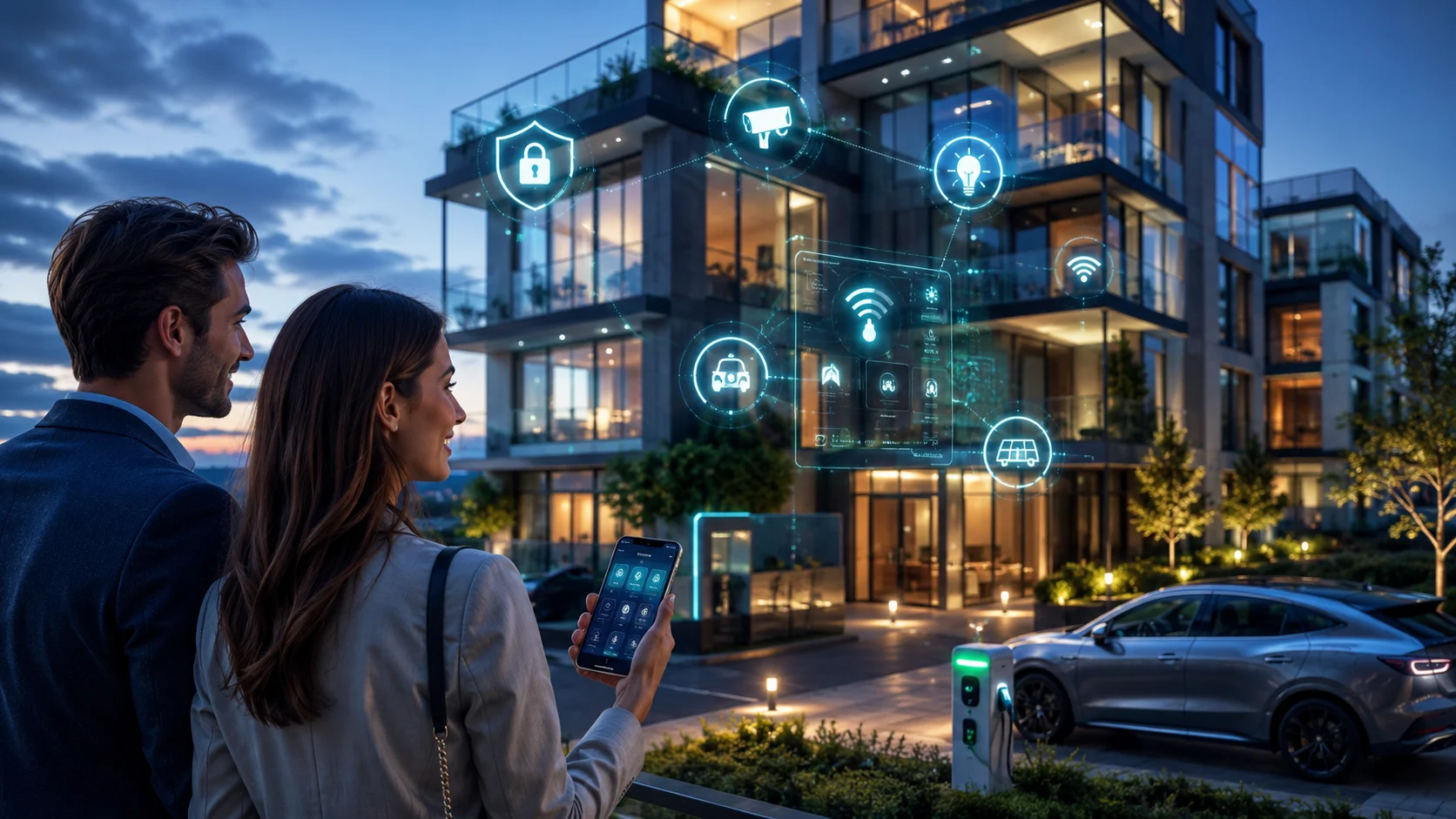
A smart building is a structure in which systems such as lighting, security, energy management, climate control and access control work interconnectedly and can be managed remotely or autonomously. With IoT (Internet of Things) sensors, it offers an ecosystem with data-collecting and analyzing infrastructure that optimizes itself according to user habits.
From the buyer's point of view, a smart building means turning on the lights from a phone, running the air conditioner before arriving home, or watching the security camera remotely. But from the developer's point of view, a smart building carries a far more strategic meaning.
A smart building is a positioning tool that differentiates the project from competitors, increases sales speed and confers pricing power. In 2026, a smart building is no longer an "add-on" but the modern buyer's basic expectation. The global smart-home market reached $164 billion in 2026 and is projected to rise to $311 billion by 2031. This growth means that not offering smart infrastructure in projects creates a competitive disadvantage.
2. The Impact in Numbers: How It Changes Sales
Let's examine the impact of smart building technologies on home sales with concrete data.
Increase in sales speed: Homes equipped with smart-home features sell an average of 8.5 days faster than traditional homes. Considered at the project level, in a 100-unit project this speed difference can shorten the total sales period by months.
Property-value increase: Research shows that smart-home features can increase a property's value by between 3% and 10%. 35% of real estate advisors report that smart features add between $5,000 and $10,000 in extra value to a property.
Buyer preference: 78% of first-time buyers see smart-home infrastructure as a decisive factor in their purchase decision. 97% of current smart-device owners report being satisfied with their products, which means the buyer who experiences it will look for these technologies in their next home too.
Pre-sale investment: 22% of home sellers install a smart security or thermostat system before going to market. This data confirms that smart technologies are perceived as a concrete marketing advantage in the sales process.
Energy-savings effect: Smart thermostats can reduce energy consumption by between 10% and 23% by learning occupancy patterns and syncing with demand-response signals. This saving reduces the long-term operating cost for the buyer and forms a strong argument in sales conversations.
3. Buyer Expectations Are Changing: Generation-Based Demand Analysis
Each generation's expectations of smart-home technologies differ. As a project owner, knowing the generational profile of your target audience directly determines which technologies you invest in.
Gen Z (born 1997-2012)
The first generation to adopt technology not as a tool but as a way of life. They find controlling the home with mobile apps natural. Voice-assistant integration, smart lighting and entertainment systems are basic expectations for this generation. Entering home-buying age, Gen Z perceives homes without smart infrastructure as "old."
Millennials (born 1981-1996)
The largest home-buyer segment. 60% of millennials rate a smart home as "essential for modern living." With the effect of having children, interest in security- and health-focused systems is high: carbon-monoxide sensors, fire alerts, remote security monitoring and air-quality monitoring stand out. They are willing to pay 20% or more extra for a smart home.
Gen X (born 1965-1980)
Focused on energy savings and practicality. Smart thermostats, automatic blinds and energy-monitoring systems are this generation's priority. They may be wary of technology; therefore ease of use and an intuitive interface are critically important. Benefit-focused communication (bill savings, long-term value) convinces this generation.
Baby Boomers (born 1946-1964)
Increasing demand for aging-in-place solutions. Smart locks, fall-detection sensors, remote health monitoring and voice control are valuable for this generation. Privacy concerns are high; transparent communication about data security is needed.
Takeaway for developers: If your target audience is millennials, prioritize security and health systems; if Gen Z, entertainment and automation integration; if Gen X and above, energy efficiency and ease of use.
4. The 6 Standout Smart Building Technologies in a Housing Project
Not all smart building technologies create equal sales impact. According to buyer research, the 6 technologies most valued and most directly influencing the purchase decision are:
4.1. Smart Security Systems
43% of consumers state that the most valuable benefit of smart devices is security. IP cameras, smart locks, biometric access, motion sensors and remote monitoring are the most visible and most convincing smart building feature for the buyer.
4.2. Smart Energy Management
Smart thermostats, energy-monitoring panels, solar-panel integration and smart plugs. Due to rising energy costs, energy efficiency has become one of the most important criteria in home purchase decisions in 2026. The energy-savings promise is a strong argument that can be supported with a concrete figure in the sales conversation.
4.3. Smart Lighting
Remote control, motion sensors, color and brightness adjustment, automatic adaptation to daylight. Lighting is the most visual and fastest-noticed component of the smart building experience. Its live-demo effect in the sales office or show unit is high.
4.4. Smart Climate Control (HVAC)
Zone-based temperature control, automatic adjustment based on room occupancy, and energy savings. As the cost of smart climate-control systems drops in 2026, their effect on energy bills is becoming increasingly visible.
4.5. Smart Water Management
Leak-detection sensors, automatic irrigation and water-consumption monitoring. As water costs rise in Turkey, interest in these systems is increasing. It is a strong sales argument, especially in villa and garden projects.
4.6. Smart Access and Parking
License-plate recognition, biometric door entry, guest-access management and smart elevator calling. It ranks high on buyers' priority list in terms of complex security and daily comfort.
5. Cost-Return Analysis: When Does the Investment Pay Off?
The developer's most basic question: "How much does the investment in smart building infrastructure reflect in the sale price and sales speed?"
The cost side: In 2026 Turkish conditions, the cost of basic smart-home infrastructure (security, lighting, thermostat, central control) for a unit ranges from about ₺150,000 to ₺400,000. For fully integrated systems, this figure can rise to the ₺750,000-₺1,600,000 band.
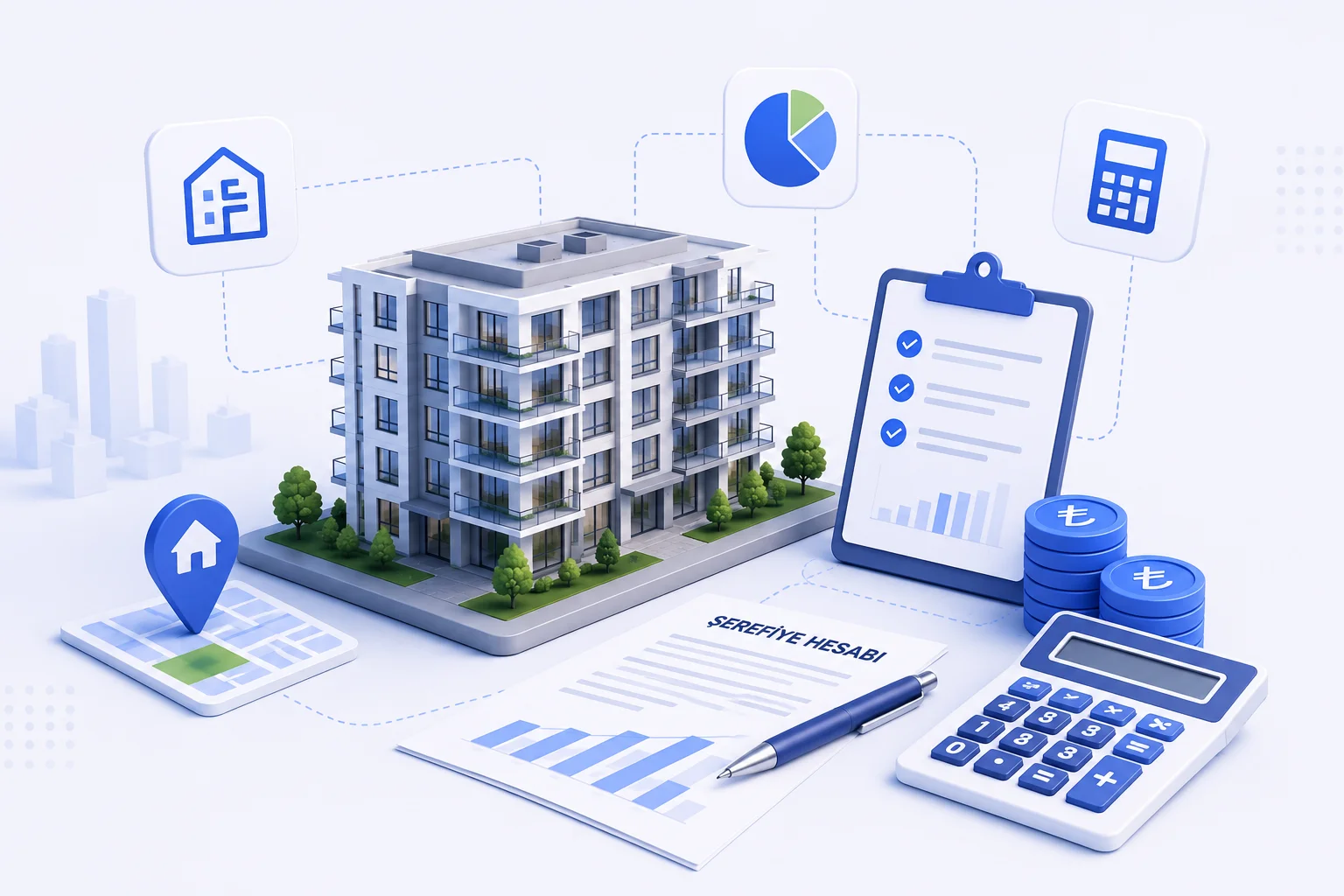
The return side: Smart features can increase a property's value by between 3% and 10%. If an average 5% value increase is assumed, on a ₺5 million unit an extra ₺250,000 of value is created. This is a return sufficient to cover, and even exceed, the cost of a basic smart-home package.
Sales-speed effect: An average of 8.5 days faster sales, considered across the project, significantly reduces financing costs. In a 100-unit project, the weeks gained in total turn into interest and operational-expense savings.
Strategic recommendations:
- Start with a basic package: A security system, smart thermostat and smart lighting deliver the highest perceived value at the lowest cost.
- Prefer a modular structure: Leave the infrastructure (wiring, hub points) ready so the buyer can integrate additional systems later. Offering a "smart-home-ready" infrastructure instead of installing the whole system optimizes the cost-benefit balance.
- Calculate cost per unit: Bulk purchasing for the whole project significantly lowers the per-unit cost.
6. How Do You Market Smart Features in the Sales Process?
Research reveals that while buyers focus on price and location, they don't sufficiently understand the advantages of smart systems. As a developer, marketing smart building features correctly directly affects the return on the investment.
Create an experience room: Set up an experience area in the sales office or show unit where smart-home systems work. When the buyer personally experiences controlling the lights by voice, watching the security camera from a phone and seeing a bill simulation from the smart thermostat, the level of persuasion increases dramatically.
Communicate benefit-first: Instead of "there is a smart lighting system," say "you save 15% on your annual electricity bill." Sell the concrete benefit, not the technical feature. For the security system, use life scenarios such as "you get a notification on your phone when your child gets home from school."
Differentiate the message by generation: Approach millennials from the angle of security and child safety. Emphasize energy savings and bill reduction to Gen X. Highlight technology and lifestyle integration to Gen Z.
Prepare comparison material: A "smart building vs. traditional building" comparison table speeds up the buyer's decision process. Show the concrete differences through monthly energy cost, security level and comfort criteria.
Integrate it into the sales presentation: Position smart building features as a separate section in your digital presentation materials. A 60-second video explaining the project's "technology vision" can be the most effective part of the sales presentation.
7. Turning Smart Features into Sales with a Digital 3D Model and CRM
Listing smart building features is not enough; the buyer needs to see these features specific to their own unit. This is where digital sales tools come in.
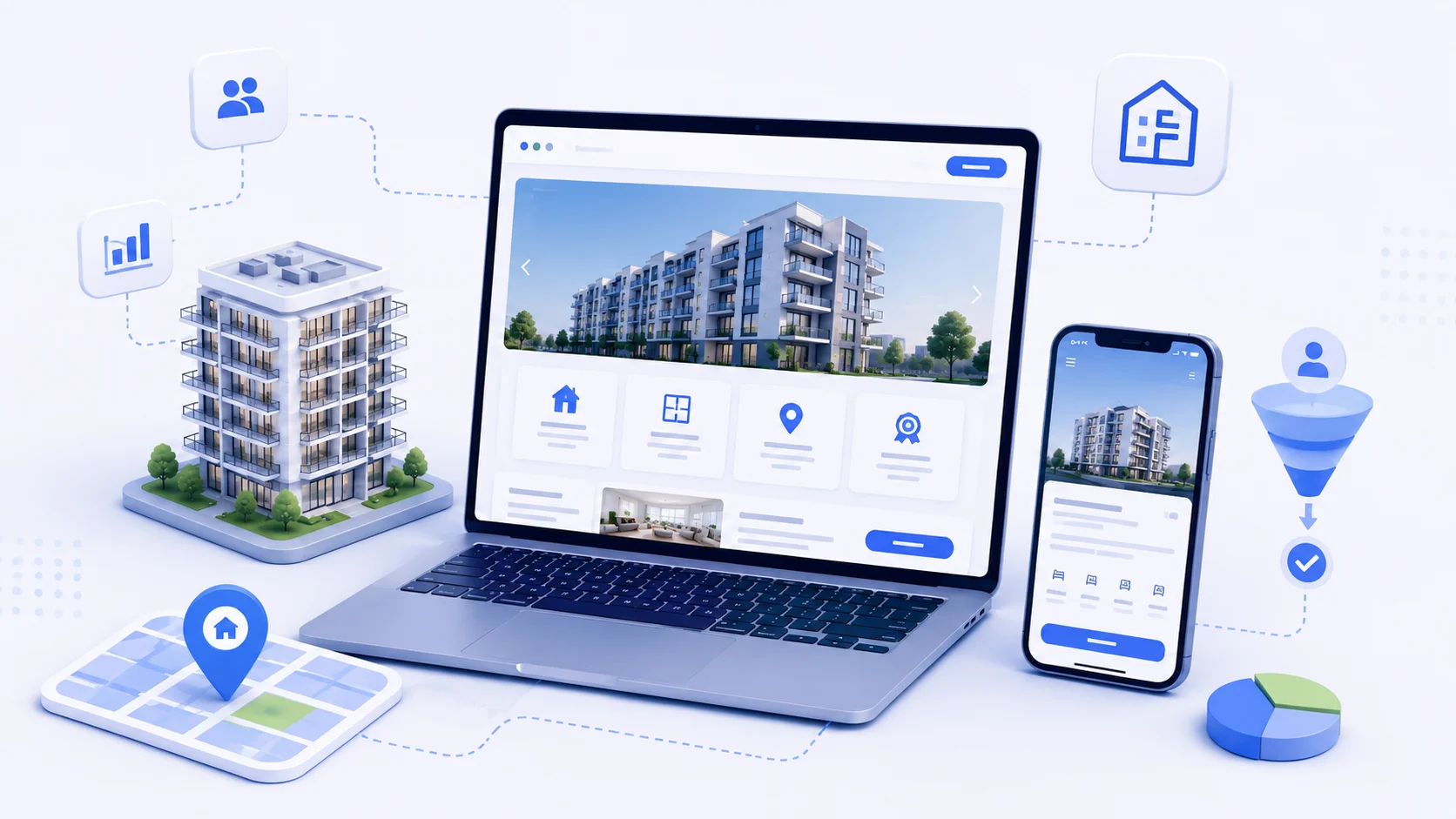
Smart building visualization on the interactive digital 3D model: When the buyer clicks on the unit they are interested in via the digital 3D model, they can see not only the m² and price information but also the smart building features offered as standard in that unit. Security package, energy-management system and smart-lighting details are presented on the unit card.
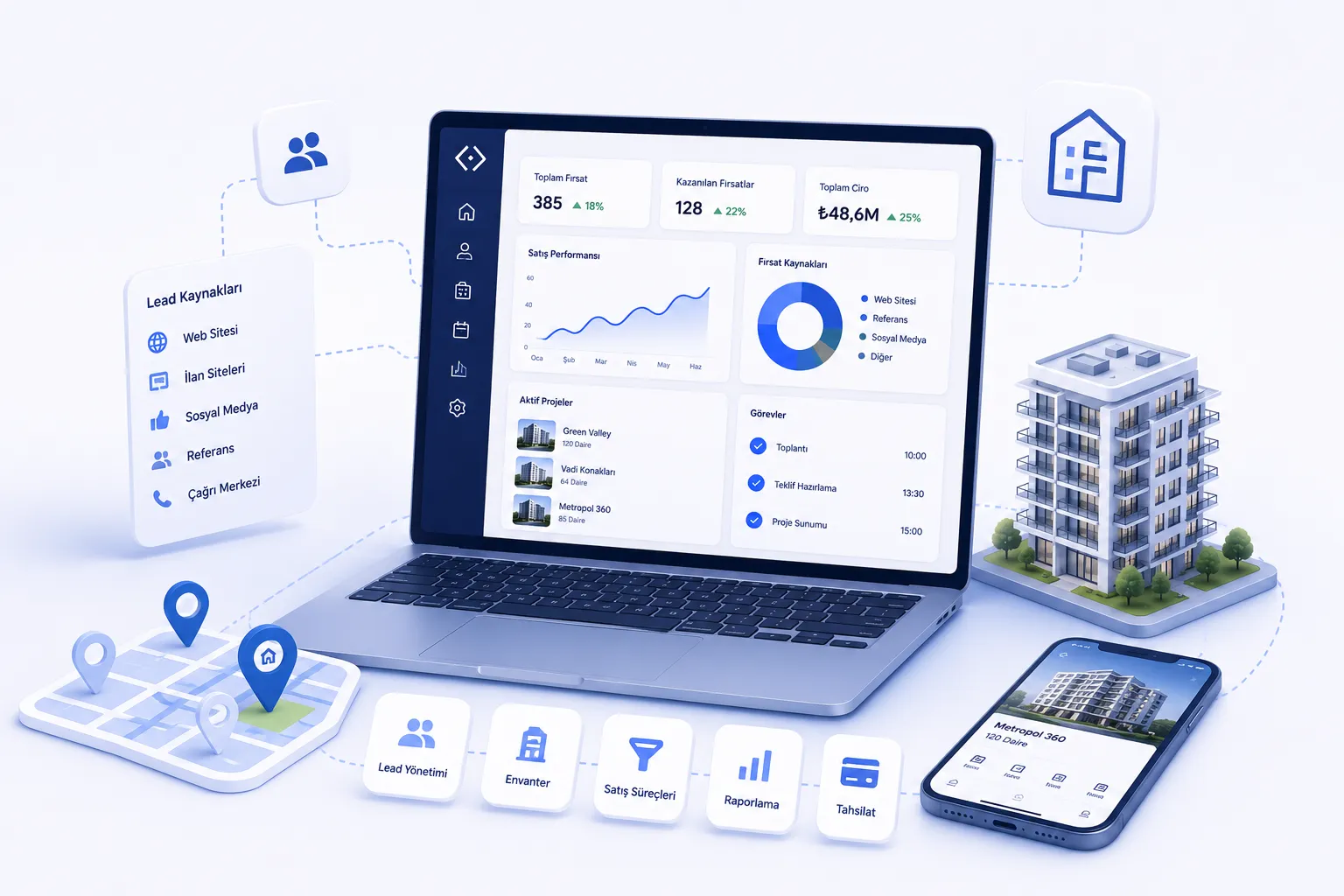
Interest tracking with the CRM: The sales advisor can track via the CRM which smart building features the buyer showed interest in. Sending security-focused content in the next follow-up message to a buyer who asks a lot about the security system strengthens the personalized sales process.
Smart building section in digital presentation materials: An interactive section within the sales presentation explaining smart building technologies conveys the project's technology vision professionally. Presentation links can be shared via WhatsApp or email so the buyer can review at their own pace.
Energy-savings calculator: Offering the buyer a personalized energy-savings simulation turns an abstract promise into a concrete figure. Personalized information like "your estimated annual energy savings in this unit: ₺18,000" speeds up the purchase decision.
Conclusion
Smart building technologies are a strategic investment that directly affects home sales in 2026. To summarize the key takeaways from this guide:
- Sales speed increases — smart homes sell an average of 8.5 days faster
- Property value rises — a value increase of between 3% and 10% can be achieved
- Buyer expectation has changed — 78% of buyers see smart infrastructure as a basic criterion
- Each generation's priority differs — security, energy, automation and health messages should be differentiated by generation
- The cost-return balance is positive — a basic smart-home package pays for itself with the value increase it creates
- The marketing method is critical — not listing features, but showing benefits and letting people experience them, increases sales
- Digital tools make the difference — 3D model, presentation and CRM integration turn smart features into sales
If you want to visualize your project's smart building features on a digital 3D model, integrate them into sales presentations and build personalized follow-up processes with a CRM, get to know Evon. By using the 3D model, presentation and CRM modules on a single platform, you can turn your smart building investment into sales performance.
Free Evon demo
See for yourself how Evon can add value to your sales process.
Frequently Asked Questions
How much do smart building technologies increase home value?
Research shows that smart-home features can increase a property's value by between 3% and 10%. The value increase varies according to the scope of the installed system, the project's location and the target audience's technology awareness.
Which smart building technologies deliver the highest ROI for a developer?
Smart security systems, smart thermostats and smart lighting deliver the highest perceived value at the lowest cost. These three components form the core of a basic smart-home package and provide the most effective arguments in the sales process.
Can smart building infrastructure be added later?
When wiring infrastructure and hub points are prepared during construction, the buyer can expand the system later. For a developer, offering a "smart-home-ready" infrastructure is a lower-cost and more flexible strategy than installing the full system.
How does a smart building affect the sales process?
Homes equipped with smart-home features sell an average of 8.5 days faster. In addition, 78% of buyers see smart infrastructure as a decisive criterion in their purchase decision. An experience room and digital presentation tools strengthen this effect.
How much does a smart-home system cost in Turkey?
In 2026 conditions, a basic smart-home package (security, lighting, thermostat) ranges from ₺150,000 to ₺400,000 per unit, while fully integrated systems range from ₺750,000 to ₺1,600,000. Bulk purchasing across the project significantly lowers the cost.